The Steel Cage Match
No way out and no help coming. Built to keep wrestlers in and outside help out, the steel cage match grew from chicken wire experiments into the classic way to end a bitter feud.
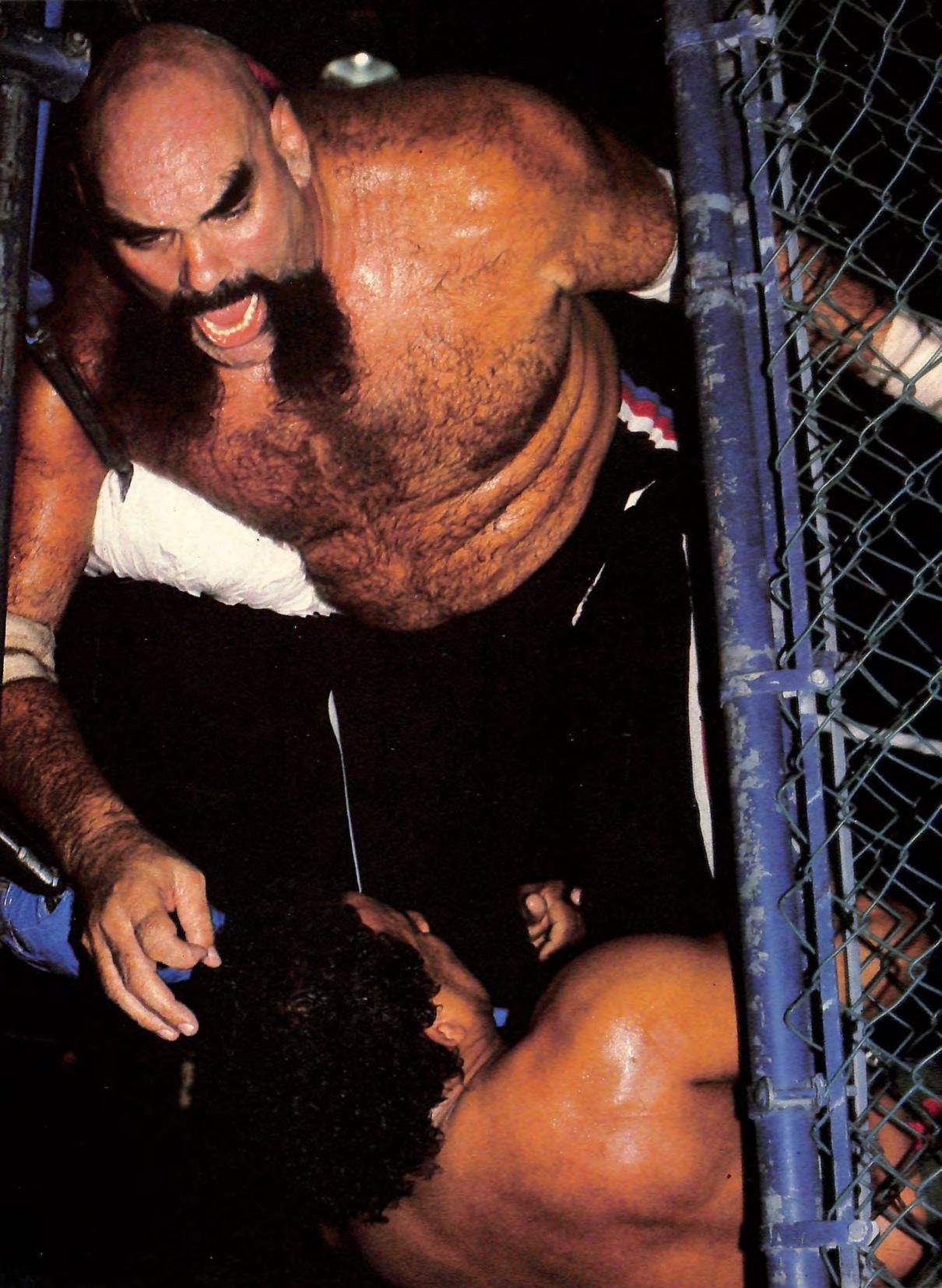
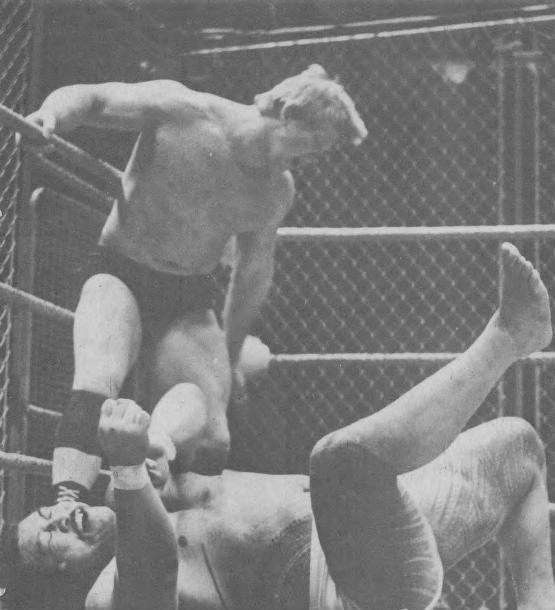
Ox Baker and Jose Gonzalez in a steel cage, around 1983: Unknown author, Public domain
A simple solution to chaos
By the 1930s, wrestling crowds were used to brawls that spilled out of the ring and villains who ran away to avoid defeat. Promoters needed a way to settle feuds once and for all. The answer was to put a fence around the ring.
A chicken wire match in Atlanta in June 1937 is often called the first cage match, though chicken wire bouts were reported in Caruthersville, Missouri, as early as January 1936. Either way, the idea spread across the territories over the following decades.
From wire to steel
Early cages were often made of chicken wire, and they could be dangerous for performers and fans alike. Over time, promoters switched to sturdier designs with steel bars and, later, chain-link fencing, which is lighter and has more give. A door in one side let the wrestlers in and allowed the referee to check on them.
Rules changed by region. In some versions, a wrestler could win only by pinfall or submission. In others, the winner was the first to climb over the top or walk out through the door. Many cages allowed both.
The blowoff match
Inside the business, the cage was the classic "blowoff," the final chapter of a long rivalry. After weeks or months of a heel cheating and escaping, fans finally got their payoff: the villain locked in with nowhere to run and no friends able to help. That promise sold a lot of tickets.
Because the cage was reserved for the biggest feuds, it carried a sense of danger and finality. Climbs to the top of the cage and falls from it became some of the most memorable images in wrestling.
The cage also changed how matches were paced. Wrestlers used the steel walls as weapons, sending opponents crashing into them, and a slow climb toward the top could build suspense for minutes. When a hero finally reached the top while the villain clawed at his boots, the noise in the building could be deafening.
Cages around the world
Mexico has its own cage tradition, the lucha en jaula, often with several wrestlers trying to escape and the last one left inside losing a mask or hair. Japan has staged extreme versions with unusual hazards. Larger structures and roofed cages came later, but they all trace back to the same simple idea of a fence around a ring.
- Wikipedia: Professional wrestling match types
- Online World of Wrestling: History of the Steel Cage Match
- Pro Wrestling Stories: Steel Cage history in wrestling
Facts on this page were checked against these sources.
- Ox Baker and Jose Gonzalez in a steel cage, around 1983: Unknown author, Public domain
- Bob Backlund and Peter Maivia, 1979: Unknown author, Public domain
Text written by Entertainment Wrestling World.