
The Territory Era
When wrestling was divided into regions. From 1948 into the 1980s, North American wrestling ran as a patchwork of regional territories, each with local heroes and a traveling world champion.
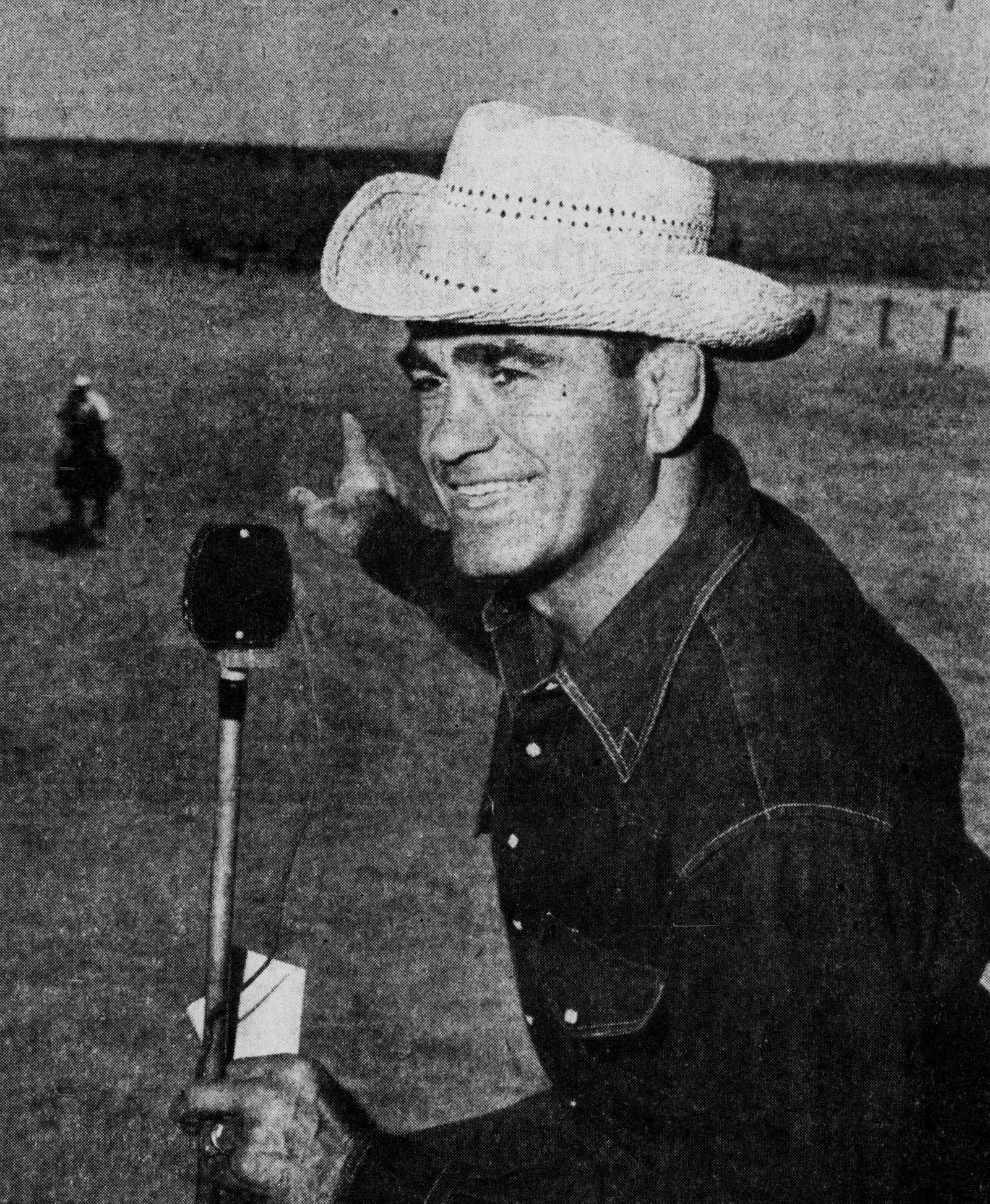
Lou Thesz in 1955: Unknown author, Public domain
A map divided by handshake
In July 1948, a group of mostly Midwestern promoters met at the Hotel President in Waterloo, Iowa, and formed the National Wrestling Alliance. The idea was simple. Each promoter would control his own region, called a territory, and the members would agree not to invade one another. Together they would recognize one world heavyweight champion who traveled from territory to territory.
Over the next decades, the alliance grew to include promoters across the United States, Canada and beyond. Places like Texas, Georgia, the Carolinas, Florida, Tennessee, the Pacific Northwest and St. Louis each had their own stars, their own TV show and their own loyal fans.
The touring champion
The traveling champion was the glue. When he came to town, he would face the local hero in the main event, making the challenger look strong while usually keeping the belt. Lou Thesz, a technically brilliant wrestler from St. Louis, became the defining champion of this era, holding the title for years at a time in the 1950s and returning to it in the 1960s.
Wrestlers moved between territories to stay fresh. A villain who had run his course in one region could pack his bags, change his name and start again somewhere else as a new character.
Weekly shows and local TV
A territory usually had a weekly television program filmed in a small studio, used to promote live shows in armories, gyms and fairgrounds across the region. The live events ran on a regular loop, with stories building week after week toward a big match. Local announcers and promoters became celebrities in their own right.
Each territory had its own flavor. Some were known for long, technical matches. Others were famous for wild brawls in small buildings packed with smoke and noise. Promoters knew their towns well, and they built stories around local rivalries, regional pride and the hard-working fans who came back every week.
The end of the map
The territory system began to crack in the 1980s. Cable television and national syndication let ambitious companies broadcast everywhere at once, and the agreements not to compete fell apart. Many regional groups closed or were absorbed. The territory era still shapes wrestling: its storytelling rhythm, its traveling champions and its idea of building a hero in front of a hometown crowd all survive in some form today.
- Wikipedia: National Wrestling Alliance
- Mid-Atlantic Gateway: A Visit to the Birthplace of the NWA
- Wikipedia: Lou Thesz
Facts on this page were checked against these sources.
- Lou Thesz in 1955: Unknown author, Public domain
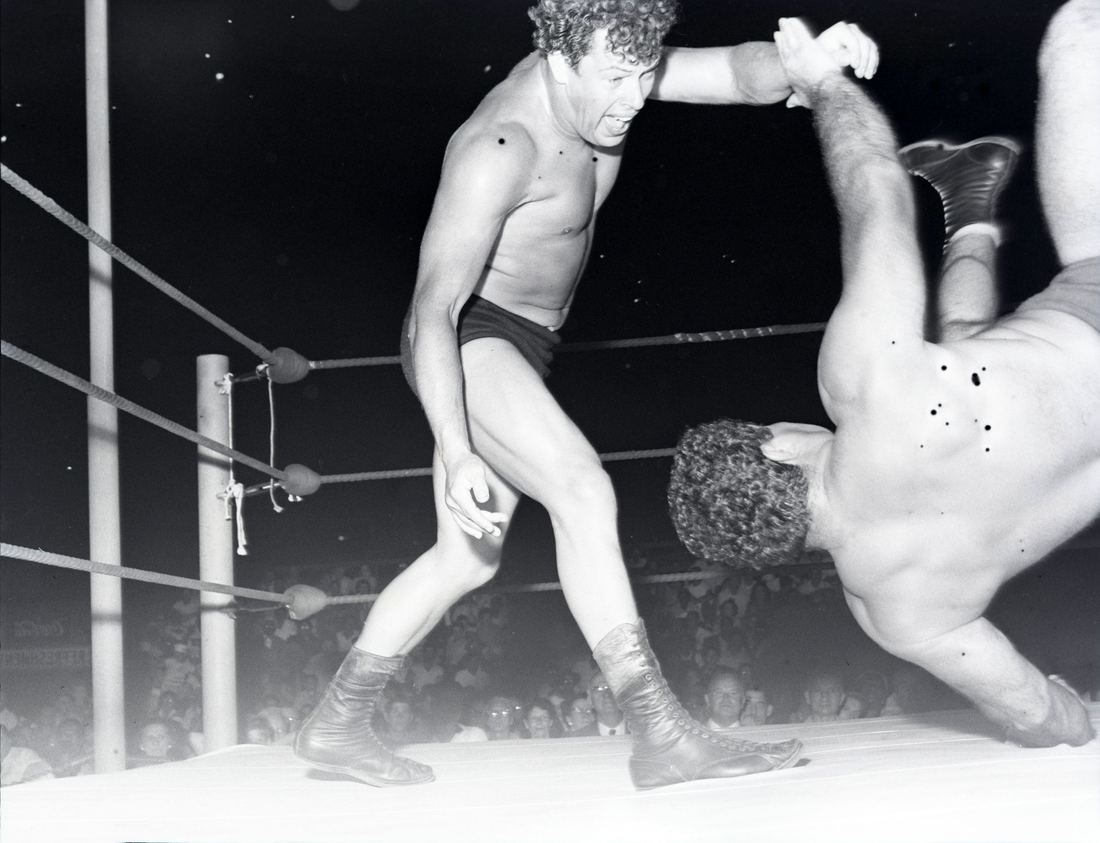
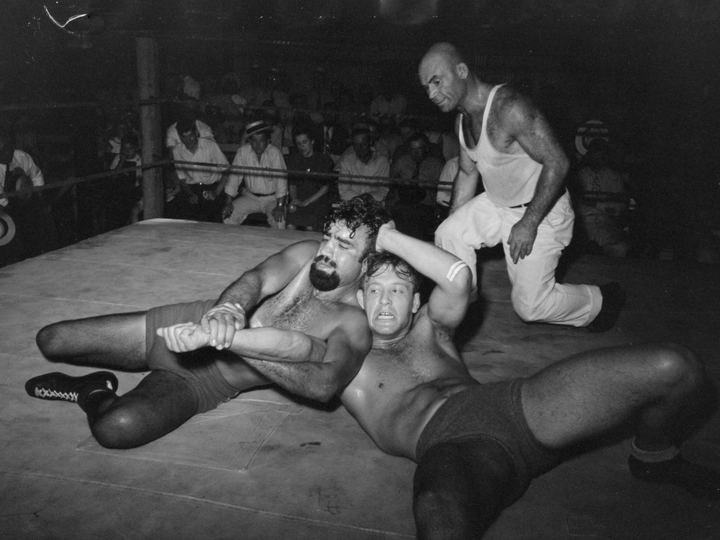
- Wrestling at Haft's Acre, Columbus, Ohio, 1958: A.V. Shirk, Public domain
Text written by Entertainment Wrestling World.





.jpg)